
Engaging customers in the design process
The strongest design decisions come from a dialogue with customers, not a one-time research handoff.
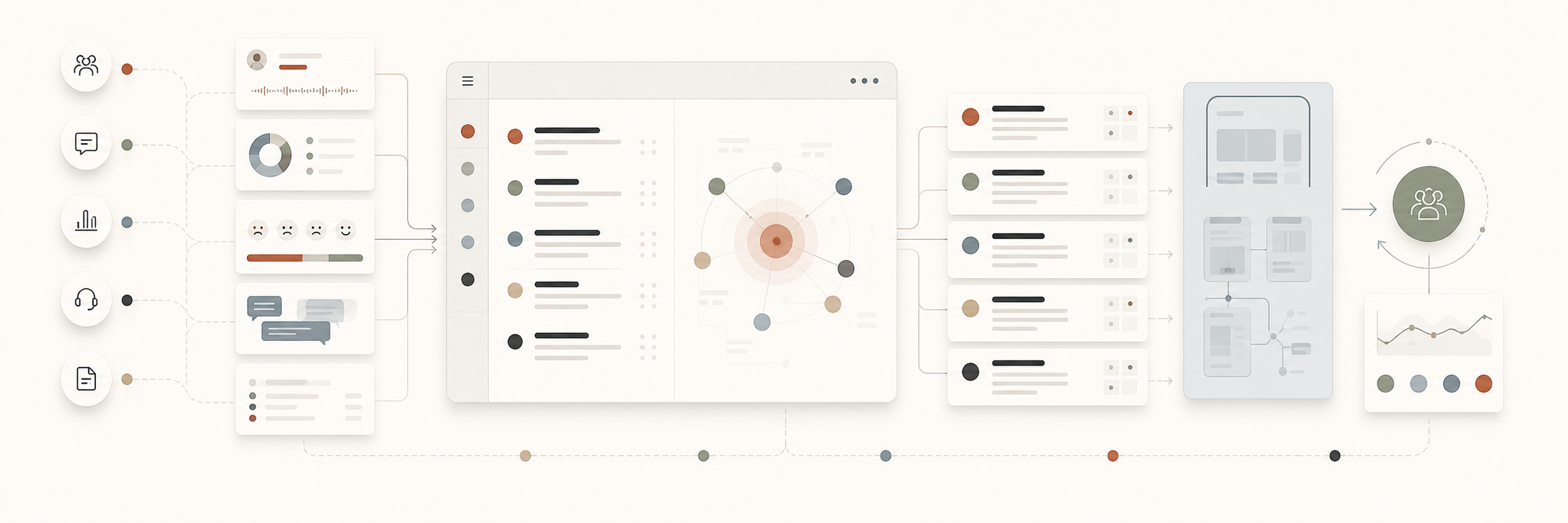
A practical model for turning customer signals into design decisions through surveys, interviews, usability testing, and product feedback loops.
Listen through multiple channels
Customer input comes from interviews, surveys, usability tests, sales conversations, support tickets, analytics, and direct product feedback. Each source has bias, so the work is to triangulate signals rather than overreact to one voice.
Turn feedback into decisions
Raw feedback is not yet product direction. Teams need synthesis, signal strength, opportunity framing, and design principles that translate customer needs into clear product bets.
Invite customers into prototypes
Prototype testing lets teams learn before engineering cost hardens. Customers can react to flow, language, information architecture, and interaction patterns while the team still has room to adjust.
Close the loop
A healthy process shows customers that their input mattered. Closing the loop builds trust and keeps future research participation strong.
- Start with evidence before choosing a solution.
- Make the decision model visible to product, design, engineering, and leadership.
- Connect craft to measurable user and business outcomes.
FAQ
How do you engage customers in design?
Use interviews, surveys, usability testing, beta feedback, support signals, and product analytics, then synthesize those inputs into design decisions.
Why is customer feedback important in product design?
It helps teams identify real needs, reduce risk, improve usability, and prioritize work that customers value.
What is the risk of customer feedback?
Feedback can be noisy or biased. Teams should triangulate multiple sources and separate stated requests from underlying needs.

Jay Trainer
Design Leader
Design executive focused on AI-native healthcare workflows, UX research, product design leadership, design systems, and human-in-the-loop product development.