
Establishing design standards and practices
Design standards are how teams make quality repeatable. They turn craft into shared infrastructure.
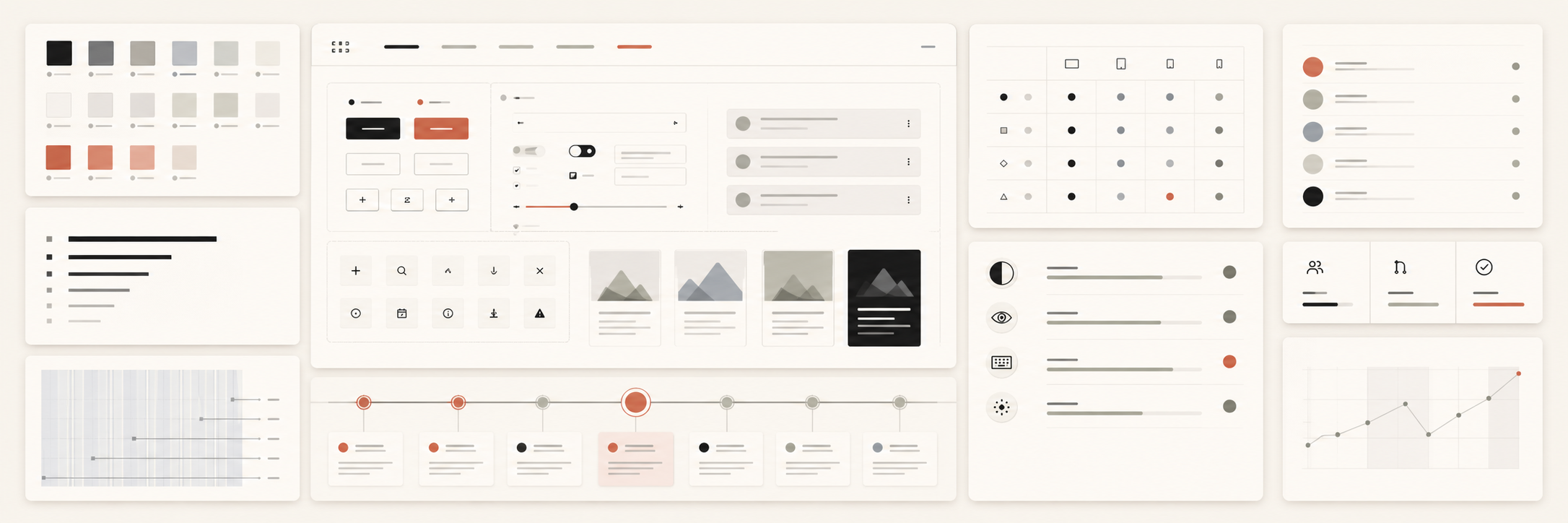
Why design standards, reusable components, documented patterns, and critique rituals help teams scale quality without slowing down.
Consistency is a usability feature
Users learn faster when patterns behave consistently. Standards reduce cognitive load, strengthen brand trust, and make complex products easier to navigate.
Standards speed up teams
Reusable components, interaction rules, accessibility guidance, and content patterns reduce rework. Designers spend more time solving product problems and less time rebuilding basic UI decisions.
Practices matter as much as components
A design system without rituals will decay. Critique, governance, documentation, contribution models, and quality reviews keep standards alive as the product changes.
Leave room for evolution
Standards should not freeze the product. Strong systems create a path for experimentation, validation, and adoption of better patterns.
- Start with evidence before choosing a solution.
- Make the decision model visible to product, design, engineering, and leadership.
- Connect craft to measurable user and business outcomes.
FAQ
What are design standards?
Design standards are shared rules, components, patterns, and practices that help teams create consistent, high-quality product experiences.
Why do design standards matter?
They improve usability, speed delivery, reduce rework, and make quality easier to scale across teams.
How do you maintain design standards?
Use documentation, contribution rules, design-system governance, critique, accessibility checks, and regular pattern audits.

Jay Trainer
Design Leader
Design executive focused on AI-native healthcare workflows, UX research, product design leadership, design systems, and human-in-the-loop product development.