
Managing the design process end-to-end
End-to-end design leadership means protecting the quality of the product from the first signal to the shipped experience.
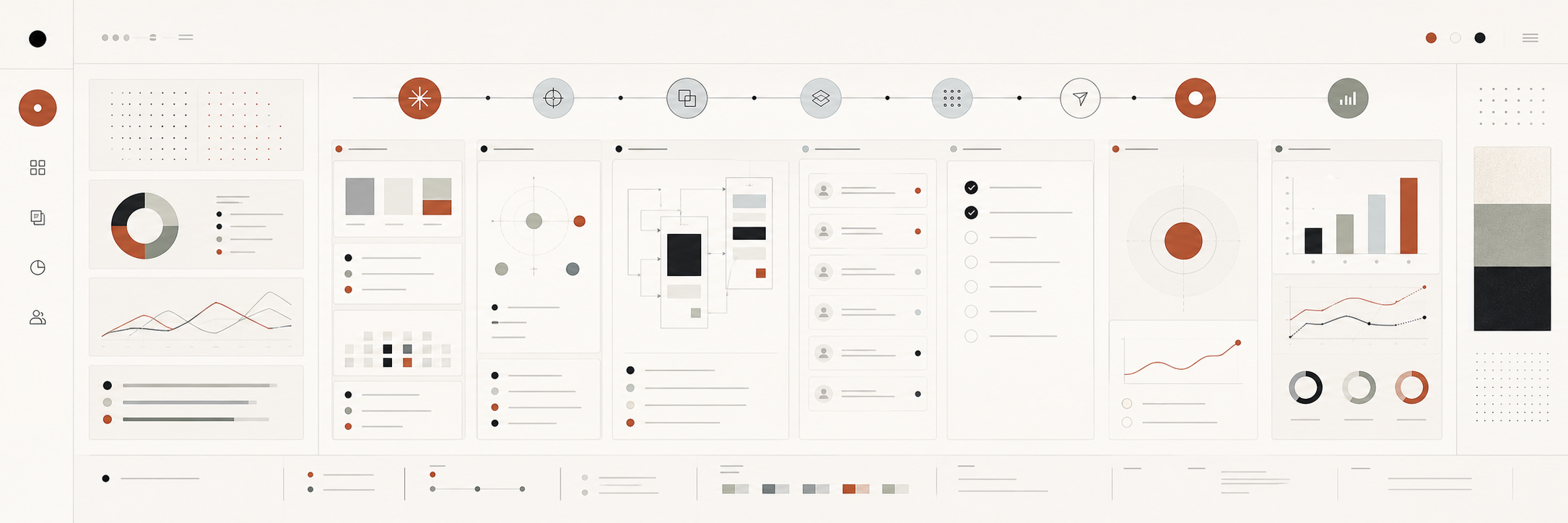
How to guide design from discovery through strategy, prototyping, validation, handoff, launch, and measurement.
Discovery creates the frame
The process starts with user research, product goals, technical constraints, and business context. Discovery gives the team a shared understanding of the problem before solution work accelerates.
Strategy narrows the field
A design leader helps the team choose what matters: target users, core jobs, principles, risks, and measurable outcomes. Strategy prevents the process from becoming a collection of disconnected artifacts.
Prototypes make decisions tangible
Wireframes, flows, and prototypes help teams see tradeoffs. They allow stakeholders and users to react to the experience before engineering investment becomes expensive.
Handoff is a continuation
Good handoff preserves context: intent, states, edge cases, accessibility requirements, evidence, and open questions. Launch is followed by measurement and iteration, not silence.
- Start with evidence before choosing a solution.
- Make the decision model visible to product, design, engineering, and leadership.
- Connect craft to measurable user and business outcomes.
FAQ
What is the end-to-end design process?
It is the full path from discovery and strategy through ideation, prototyping, validation, handoff, launch, and measurement.
How do design leaders manage the process?
They align stakeholders, protect user evidence, clarify decisions, coordinate disciplines, and keep quality visible through delivery.
Why does design handoff fail?
Handoff fails when intent, states, edge cases, accessibility needs, and evidence are not preserved for engineering.

Jay Trainer
Design Leader
Design executive focused on AI-native healthcare workflows, UX research, product design leadership, design systems, and human-in-the-loop product development.